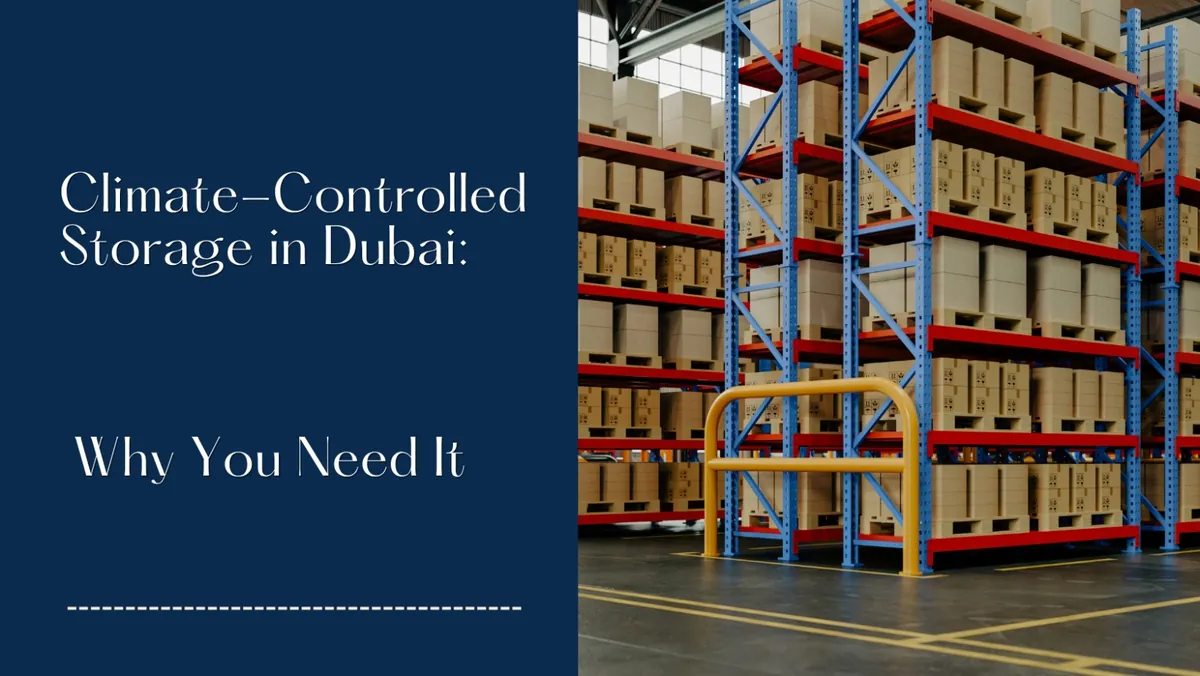
Climate controlled storage in Dubai is essential because the city’s extreme heat (45–50°C summers, peaks 111°F) and high humidity (50–75% average, 90%+ near coast) rapidly damage unprotected belongings. Standard, non-climate-controlled units expose furniture to warping, electronics to component failure, documents to mold, and leather to cracking. Climate controlled storage maintains 18–21°C and 35–55% humidity year-round, protecting your valuables from thermal stress, corrosion, and moisture damage—saving you thousands in replacement costs.
Dubai is one of the world’s most beautiful cities. But it’s also one of the harshest environments in which to store belongings.
The heat is relentless. Temperatures soar above 45°C (113°F) during summer months, with peaks exceeding 50°C (122°F). The humidity is punishing. Especially near the coast, relative humidity climbs to 75–90%, compounding the damage heat inflicts on vulnerable items.
If you store furniture, electronics, documents, or collectibles in a standard, non-climate-controlled unit, you will likely suffer losses. Wood swells and cracks. Leather dries out and fractures. Electronics fail under thermal stress. Paper yellows and molds. Leather upholstery deteriorates. Photographs fade.
This article explains why climate controlled storage in Dubai is not a luxury—it’s protection. We’ll cover the science behind the damage, which items are at risk, what climate control actually does, and how Green Sky Logistics keeps your valuables safe year-round.
1. Dubai’s Climate: The Enemy of Stored Goods
1.1 Temperature Extremes in Dubai
Dubai’s summers are brutal for stored items. Here’s the data:
| Month | Average High | Average Low | Peak Recorded | Risk Level |
|---|---|---|---|---|
| January | 24°C (75°F) | 14°C (57°F) | 38°C (100°F) | Low |
| April | 35°C (95°F) | 23°C (73°F) | 46°C (115°F) | Moderate |
| July | 41°C (106°F) | 28°C (82°F) | 50°C+ (122°F) | Critical |
| August | 41°C (106°F) | 28°C (82°F) | 51°C+ (124°F) | Critical |
| September | 38°C (100°F) | 26°C (79°F) | 48°C (118°F) | High |
| October | 33°C (91°F) | 21°C (70°F) | 45°C (113°F) | Moderate |
Why this matters: A non-climate controlled storage unit in Dubai reaches interior temperatures of 50–55°C (122–131°F) in summer. This is hot enough to:
- Warp wood furniture permanently
- Damage electronics (component failure occurs above 45°C for most electronics)
- Crack leather and upholstery
- Accelerate chemical breakdown of adhesives, paints, and coatings
Example: A wooden table stored in standard conditions might increase in temperature by 50°C above the ambient 41°C summer average, reaching 91°C inside an enclosed unit. At this temperature, wood expands unevenly, grain cracks appear, and veneers peel.
1.2 Humidity: The Hidden Killer
Heat alone is dangerous. Heat combined with humidity is catastrophic.
Dubai’s humidity levels vary seasonally but are consistently problematic for stored items:
| Season | Humidity Range | Coastal Premium | Why It Matters |
|---|---|---|---|
| Winter (Dec–Feb) | 50–60% RH | +10% near coast | Moderate risk; winter relief brief |
| Spring (Mar–May) | 35–50% RH | +10% near coast | Seasonal window for lower humidity |
| Summer (Jun–Sep) | 60–75% RH | +15% near coast | High risk; moisture accumulation |
| Autumn (Oct–Nov) | 50–65% RH | +10% near coast | Risk returning as temp drops |
What humidity does to stored items:
- 40–55% RH (Safe zone): Minimal risk. This is what climate controlled storage maintains.
- 55–65% RH (Caution zone): Mold begins to form on sensitive items (documents, leather, fabrics).
- 65–75% RH (Danger zone): Accelerated mold growth, rust on metal, wood swelling.
- 75%+ RH (Critical): Rapid deterioration. Antiques, electronics, leather, and textiles all at severe risk.
During Dubai’s summer monsoon months, coastal humidity can spike to 85–90% RH. In a non-climate controlled unit with poor ventilation, interior humidity matches or exceeds exterior humidity, creating ideal conditions for mold, mildew, and corrosion.
1.3 The Combined Effect: Heat + Humidity
The danger in Dubai comes from the combination of extreme heat and variable humidity.
Why this is worse than heat or humidity alone:
- High heat + high humidity = accelerated chemical reactions. Wood glue breaks down faster. Paint cracks and peels. Leather deteriorates. Metal rusts at 10× the normal rate.
- Temperature cycling + moisture = wood movement. As daily temperatures swing (cooler nights, hotter days), wood expands and contracts. Moisture in the air feeds into the wood’s grain, causing uneven swelling and cracking.
- Coastal location = salt-laden air. Dubai’s proximity to the sea means salt particles are in the air. Salt accelerates corrosion of metal furniture, electronics, and tools. In 6 months in uncontrolled storage, chrome can develop rust, steel can pit, and aluminum can corrode.
Real-world example: A homeowner stores a leather sofa in a standard unit for 6 months during a business relocation. Summer humidity reaches 75%, and the unit interior hits 50°C. By month 3, the leather begins to dry and crack. By month 6, it’s irreparably damaged—front and back. Replacement cost: AED 8,000–12,000. Cost of 6 months climate controlled storage in Dubai: ~AED 1,500–2,000. The sofa would have been protected for a fraction of its replacement value.
2. What Gets Damaged in Non-Climate Controlled Storage?
Not everything suffers equally from heat and humidity. High-value, sensitive items are at the greatest risk.
2.1 Electronics & Appliances
Risk Level: CRITICAL
Electronics are engineered to operate within strict temperature ranges (typically -10°C to 50°C). Beyond these limits, failure is inevitable.
What happens:
- Component thermal stress: Capacitors, resistors, and circuit boards expand at different rates under extreme heat. Solder joints crack. Components fail.
- Battery degradation: Lithium batteries (phones, laptops, power tools) degrade at accelerated rates above 40°C. A battery stored at 50°C degrades 5–10× faster than one stored at 20°C.
- Screen damage: LCD and LED screens become discolored or develop dead pixels above 45°C.
- Corrosion: Moisture causes corrosion on circuit boards, connections, and metal contacts.
Affected items:
- Televisions, computers, monitors
- Air conditioning units, refrigerators
- Microwave ovens, ovens
- Washing machines, dryers
- Tools (power drills, saws, etc.)
- Servers, networking equipment
- Cameras, projectors, AV equipment
Replacement cost if damaged: AED 2,000–20,000+ per item
2.2 Wooden Furniture
Risk Level: CRITICAL
Wood expands and contracts with moisture and heat. In Dubai’s extreme climate, wood suffers severe damage. So for furniture storage climate control is inevitable.
What happens:
- Uneven swelling: Wood absorbs moisture unevenly. One side swells more than another, warping doors, drawers, and tabletops.
- Grain cracking: As wood dries during the day and absorbs moisture at night, the grain experiences stress. Fine cracks appear along the grain (radial checking).
- Veneer peeling: Veneered furniture (cheaper pieces with a thin wood veneer over plywood) delaminates as the adhesive breaks down under heat and humidity.
- Joint failure: Mortise and tenon joints, dowel joints, and glued connections weaken as glue deteriorates. Drawers fall apart. Doors hang loose.
Affected items:
- Dining tables, desks, shelving
- Bed frames, nightstands
- Cabinets, dressers
- Chairs and benches
- Bookshelves
- Any item with wood veneers or fine joinery
2.3 Leather & Upholstery
Risk Level: CRITICAL
Leather is an organic material. Heat and humidity cause it to deteriorate.
What happens:
- Cracking and peeling: Leather loses moisture under heat, becoming brittle. It cracks, flakes, and peels.
- Color fading: UV light (if unit has windows) and heat accelerate dye breakdown. Leather becomes discolored and faded.
- Mold and mildew: High humidity allows mold to colonize leather surfaces, especially if spores are present. Mold causes permanent staining and deterioration.
- Adhesive failure: If leather is glued to foam or fabric (sofas, chairs), the adhesive fails, causing delamination.
Affected items:
- Leather sofas and chairs
- Leather jackets and coats
- Leather shoes and bags
- Leather-bound books
- Leather desk organizers
- Leather car seats (if storing a vehicle)
2.4 Documents, Photos, & Paper
Risk Level: HIGH
Paper is vulnerable to moisture and heat.
What happens:
- Yellowing: Heat and humidity cause paper to oxidize and yellow (even acidic wood pulp paper will yellow within months under these conditions).
- Mold and mildew: Humidity above 60% allows mold spores to germinate on paper surfaces. Mold leaves permanent brown spots and damages the paper’s integrity.
- Ink bleeding/fading: Heat causes inks to fade. Moisture causes inks to bleed and smudge.
- Brittleness: Paper loses its tensile strength under heat and becomes brittle and prone to tearing.
Affected items:
- Important documents (contracts, deeds, insurance papers)
- Family photos (especially prints before digital)
- Books and manuscripts
- Certificates and diplomas
- Tax records and financial documents
- Artwork and prints
Replacement cost if damaged: Often irreplaceable (original documents, family photos, heirlooms)
2.5 Art, Antiques, & Collectibles
Risk Level: CRITICAL
High-value, irreplaceable items suffer rapid deterioration without climate control.
What happens:
- Paint cracking: Oil paintings crack as the canvas shrinks and expands. Acrylic paintings fade and become discolored.
- Frame damage: Wood frames warp and split. Metal frames corrode.
- Ceramic/porcelain cracking: Glazed ceramics and porcelain expand at different rates than the base clay, causing crazing (fine cracks) and fractures.
- Textile decay: Antique textiles (tapestries, carpets) fade, weaken, and develop mold in high humidity.
- Metal corrosion: Antique metal (bronze, copper, iron, silver) oxidizes and corrodes rapidly in humid conditions.
Affected items:
- Oil paintings, watercolors, prints
- Antique furniture
- Collectible figurines, ceramics, porcelain
- Antique coins and medals
- Antique textiles (rugs, tapestries)
- Vintage instruments
- Collectible cars and motorcycles
Replacement cost if damaged: Often priceless (sentimental value) or AED 10,000–100,000+ (market value)
3. What Climate Control Does (The Science)
Climate controlled storage in Dubai need to maintain stable temperature and humidity year-round. Here’s what that means in practice.
3.1 Temperature Control
Standard climate-controlled storage maintains: 18–21°C (64–70°F)
This temperature is significant because:
- It’s the “safe zone” for nearly all materials. Electronics, wood, leather, paper, and paint all remain stable at 18–21°C.
- It prevents thermal stress. At this temperature, materials don’t expand or contract in response to extreme ambient heat. Wood stays flat. Electronics stay cool. Leather stays supple.
- It’s year-round consistency. Whether it’s 50°C outside in August or 24°C in January, the inside of a climate-controlled unit stays 18–21°C. No thermal cycling. No damage.
Energy source: Modern climate-controlled facilities use industrial-grade air conditioning, often powered by high-efficiency systems that circulate cooled air throughout the facility and into each unit.
3.2 Humidity Control
Standard climate-controlled storage maintains: 35–55% Relative Humidity (RH), target 45% RH
This humidity range is critical because:
- 35–55% RH prevents mold growth. Mold needs at least 60% RH to germinate. At 45% RH, mold spores cannot germinate. Your items stay protected.
- It prevents wood swelling. Wood stabilizes at approximately 12% moisture content when the surrounding air is 45% RH. At this level, wood doesn’t absorb or release moisture. No warping. No cracking.
- It prevents metal corrosion. Rust requires moisture. At 45% RH with low condensation, metal surfaces remain dry and corrosion is prevented.
- It protects leather and textiles. These materials remain supple (not cracked from dryness) and resistant to mold (not soggy from moisture).
3.3 Combined Effect: Stable Environment
The power of climate control is stability. Instead of extreme temperature swings (from 14°C at night to 50°C during the day) and humidity swings (from 40% to 90%), your items experience a stable, unchanging environment.
Why stability matters:
- No daily thermal expansion/contraction = no cracking, warping, or stress
- Constant humidity = no moisture absorption/release = no wood swelling
- No temperature cycling = no accelerated chemical breakdown
- No mold-friendly humidity = no mold growth
4. Why Green Sky Logistics’ Climate Control Is the Gold Standard in Dubai
4.1 Industry-Leading Temperature Precision
Unlike standard facilities that maintain a broader range (e.g., 18–24°C), Green Sky’s advanced HVAC systems maintain a tighter band. This level of precision is critical for:
- Sensitive electronics: Computer servers, data centers, and expensive tech require tight temperature control.
- Fine art and antiques: High-end collectibles, paintings, and antiquities benefit from minimal thermal fluctuation.
- Vintage wines and spirits: Climate-sensitive collections require exact temperature.
Technology: Green Sky uses zone-based HVAC systems that continuously monitor temperature in each unit and adjust cooling in real-time, ensuring no spot in the facility deviates from the target range. Read more on how to rent self storage in Dubai in this detailed step by step guide.
4.2 Humidity Monitoring & Control
Green Sky’s humidity control system includes:
- Automated dehumidification during high-humidity seasons (June–September)
- Air circulation fans ensuring uniform humidity throughout the facility
- Monthly humidity reports provided to customers (you can track the exact conditions your items are stored in)
Why this matters: Dubai’s summer monsoon can push coastal humidity to 85–90%. Without active dehumidification, non-climate-controlled units reach these levels internally. Green Sky’s system actively removes moisture, keeping it at a safe 45% RH.
4.4 Transparent Monitoring & Access
Green Sky offers:
Unlike competitors who treat climate control as a black box (you pay but never see data), Green Sky provides transparency. You know exactly what conditions your items are stored in.
4.5 Specialized Climate Zones
For high-value items, Green Sky Logistics offers:
- Ultra-premium zones maintained at 16–19°C (for fine art, rare books, wine)
- Standard zones maintained at 18–21°C (for household items, general storage)
- Standard (non-climate-controlled) zones for items that don’t require climate control (cost savings for customers who don’t need it)
This flexibility allows customers to match their items to the appropriate climate zone, balancing protection and cost.
5. Items That MUST Go in Climate-Controlled Storage
If your items fall into these categories, standard storage is not an option. They will be damaged.
✅ Electronics & Tech
- Computers, servers, networking equipment
- Televisions, monitors, projectors
- Audio equipment (amplifiers, speakers, receivers)
- Cameras, drones, video equipment
- Gaming consoles, equipment
- Mobile devices, tablets
✅ Wooden Furniture
- Dining tables, desks, shelving
- Bed frames, chests of drawers
- Chairs, benches, cabinets
- Antique or vintage wood furniture
- Any hardwood or fine-joinery pieces
✅ Leather & Upholstery
- Leather sofas, chairs, ottomans
- Leather jackets, shoes, accessories
- Upholstered furniture (sofas, chairs, cushions)
- Leather-bound books, journals
✅ Documents & Paper
- Important documents (deeds, contracts, insurance)
- Family photos (irreplaceable)
- Books, manuscripts, rare volumes
- Historical records, certificates
- Tax documents, financial records
✅ Art & Collectibles
- Oil paintings, watercolors, prints, drawings
- Antique textiles (rugs, tapestries, quilts)
- Ceramics, porcelain, figurines
- Collectible coins, medals, and memorabilia
- Antique instruments (pianos, guitars, violins)
✅ Climate-Sensitive Items
- Wine, spirits, collectible beverages
- Medications, pharmaceuticals (temperature-sensitive)
- Seeds, plant materials
- Antique toys, games, and collectibles
- Luxury watches, jewelry
⚠️ Conditional (Check with Facility)
- Vehicles storage (classic cars, motorcycles, RVs) — benefit from climate control
- Business inventory (if temperature-sensitive)
- Seasonal items (high-end decor, holiday items)
6. Comparing Climate-Controlled vs. Standard Storage in Dubai
| Factor | Climate-Controlled | Standard (Non-AC) |
|---|---|---|
| Temperature | 18–21°C (stable) | 14–50+°C (extreme swings) |
| Humidity | 35–55% RH (safe) | 40–90% RH (dangerous) |
| Electronics | ✅ Safe | ❌ Risk of failure in months |
| Wood Furniture | ✅ Safe | ❌ Warping, cracking within 6 months |
| Leather & Upholstery | ✅ Safe | ❌ Cracking, peeling within 3–6 months |
| Documents & Photos | ✅ Safe | ❌ Mold, yellowing within months |
| Art & Antiques | ✅ Safe | ❌ Irreversible damage within months |
| Cost (per 10×10 unit) | AED 900–1,200/month | AED 400–600/month |
| True Cost of Damage | AED 0 (protected) | AED 5,000–20,000+ (typical loss) |
| Best Use Case | Valuable items, long-term storage | Non-sensitive items, bulk storage |
Financial Reality: A 50 sq ft climate-controlled storage unit costs roughly AED 100–150 more per month than standard storage. But one damaged electronics item, piece of furniture, or set of documents will cost 10–100× more to replace. The cost difference is negligible for insurance.
7. How to Choose Climate-Controlled Storage in Dubai
7.1 Verify Temperature Control
Ask the facility:
- What is the maintained temperature range?
- Can you access real-time temperature data?
- What’s the response time if equipment fails?
Red flags:
- Facility claims “temperature-controlled” but can’t specify the exact range
- No way to monitor conditions
7.2 Verify Humidity Control
Ask the facility:
- What humidity range do you maintain?
- How is humidity monitored? (Digital meters? Manual checks?)
- What dehumidification equipment is used?
- Can customers access humidity data?
Red flags:
- “We have AC; humidity is controlled” (AC alone doesn’t control humidity adequately)
- No specific humidity range mentioned
- No monitoring system is described
- No customer access to data
7.3 Check for Backup Systems
Ask the facility:
- How long until generators kick in if primary power fails?
- What happens if HVAC equipment fails?
Red flags:
- No written protocol for equipment failure
8. Climate-Controlled Storage FAQ
8.1 Is climate control worth the extra cost?
Short answer: Yes, absolutely.
If you’re storing anything worth more than AED 2,000 (electronics, furniture, documents, collectibles), climate control pays for itself by protecting that item from damage.
Example: A furniture set worth AED 8,000 stored for 12 months:
- Climate-controlled: AED 12,000 storage (12 months × AED 1,000/month) = Total cost AED 20,000
- Standard: AED 6,000 storage (12 months × AED 500/month), but item damaged, replacement AED 8,000 = Total cost AED 14,000
In this example, climate control costs AED 6,000 more but saves the furniture. If the item is damaged, total cost reaches AED 14,000 anyway—plus you’ve lost a beloved piece. Climate control is the financially rational choice.
8.2 How much does climate-controlled storage cost in Dubai?
Price range: AED 600–1,500/month depending on unit size and location
| Unit Size | Standard (AC) | Ultra-Premium (AC) |
|---|---|---|
| 5×5 (25 sq ft) | AED 600–800 | AED 900–1,100 |
| 10×10 (100 sq ft) | AED 1,000–1,300 | AED 1,400–1,700 |
| 10×15 (150 sq ft) | AED 1,400–1,800 | AED 2,000–2,400 |
| 10×20 (200 sq ft) | AED 1,800–2,200 | AED 2,500–3,000 |
Green Sky pricing: On the lower end of this range due to operational efficiency and volume.
8.3 Can I store items in non-climate-controlled storage temporarily?
It depends on duration and item type.
- Electronics, wood furniture, leather: Not recommended beyond 2–3 months, especially during summer
- Non-sensitive items: 6–12 months is acceptable (boxes of non-perishable items, plastic goods, etc.)
Rule of thumb: If you wouldn’t want the item exposed to 50°C heat and 80% humidity for the duration of storage, use climate control.
8.4 What temperature and humidity should I expect in climate-controlled storage?
Industry standard: 18–21°C, 45–55% RH
These ranges are optimal for preserving nearly all materials for indefinite periods.
8.5 How long can I safely store items in climate control?
Answer: Indefinitely.
As long as temperature and humidity remain stable, items can be stored for years, decades, or even centuries without deterioration. The oldest books in the world (some 500+ years old) are stored in climate-controlled libraries.
Practical duration depends on your needs, not climate constraints.
8.6 Is it worth climate controlling for just 3 months?
Yes, for valuable items.
Three months of summer in Dubai (June–September) is the highest-risk period. If you’re storing valuable items during this window, climate control is essential. Cost: ~AED 3,000–4,000 for a 10×10 unit for 3 months. Damage from non-climate-controlled storage during summer: potentially AED 5,000–20,000+.
9. Real-World Examples: Climate Control Saves Money
Example 1: The Furniture Collector
Scenario: A Dubai resident stored a AED 12,000 leather sofa and a wooden dining set in a standard unit for 6 months while renovating her home.
Standard unit (non-AC):
- Cost: AED 3,000 (6 months × AED 500/month)
- Result: The leather sofa developed cracks. Wood dining chairs warped and had joint failure.
- Replacement cost: AED 8,000 sofa + AED 4,000 dining set = AED 12,000
- Total loss: AED 15,000
Climate-controlled unit (same scenario):
- Cost: AED 6,000 (6 months × AED 1,000/month)
- Result: Furniture arrived in pristine condition.
- Total cost: AED 6,000
Lesson: Climate control saved AED 9,000 and preserved valuable furniture.
Example 2: The Tech Entrepreneur
Scenario: A business owner stored 5 computers and networking equipment (AED 25,000 total value) for 8 months while relocating offices.
Standard unit (non-AC):
- Cost: AED 2,400 (8 months × AED 300/month)
- Result: 3 of 5 computers failed due to heat-induced component failure. The networking equipment had corrosion and connection failures.
- Replacement/repair cost: AED 12,000
- Total loss: AED 14,400
Climate-controlled unit (same scenario):
- Cost: AED 5,600 (8 months × AED 700/month)
- Result: All equipment arrived in working condition.
- Total cost: AED 5,600
Lesson: Climate control prevented AED 8,800 in equipment damage.
Example 3: The Art Collector
Scenario: A collector stored an oil painting (valued at AED 50,000) and antique textiles (AED 15,000) for 12 months.
Standard unit (non-AC):
- Cost: AED 3,600 (12 months × AED 300/month)
- Result: Painting developed craquelure (fine cracks) from thermal stress. Textile developed mold spots and weakened fibers.
Climate-controlled unit (same scenario):
- Cost: AED 9,600 (12 months × AED 800/month)
- Result: Artwork arrived in pristine condition.
- Total cost: AED 9,600
10. Conclusion: Climate Control Is Non-Negotiable in Dubai
Dubai’s climate is one of the harshest on Earth. Uncontrolled storage in Dubai is a financial gamble. You’re betting that your items won’t suffer from 50°C heat, 80%+ humidity, thermal cycling, and mold-friendly conditions.
That bet loses.
The facts:
- Electronics fail under Dubai’s heat within months
- Wood furniture warps and cracks within 6 months
- Leather deteriorates within 3–6 months
- Documents and photos mold within weeks to months
- Fine art and antiques suffer irreversible damage within months
Climate-controlled storage costs 30–50% more than standard storage. But it protects items worth thousands or tens of thousands of dirhams—or items with irreplaceable sentimental value.
The math is simple: If you’re storing anything worth more than AED 2,000, climate control is the rational financial choice. If you’re storing irreplaceable items (family photos, important documents, heirlooms), climate control is non-negotiable.
11. Green Sky Logistics: Climate Control Done Right
Green Sky Logistics maintains the strictest climate control standards in Dubai:
Our locations across Dubai:
- Al Quoz Industrial Area (central Dubai)
- Jebel Ali (south Dubai)
- Dubai Silicon Oasis (east Dubai)
- Dubai Marina/Downtown (premium location)
Ready to protect your valuables?
📞 Call Green Sky: +971 56 784 5132
FAQ: Climate-Controlled Storage
Q1: What’s the difference between “climate-controlled” and “air-conditioned”?
Answer: These terms are often used interchangeably, but there’s a subtle difference:
- Air-conditioned (AC): Provides cooling only. Temperature is maintained, but humidity may not be controlled independently.
- Climate-controlled: Maintains both temperature AND humidity. This is the superior standard.
Q2: Do I need climate control for a 1-month storage?
Answer: Not unless you’re storing heat-sensitive items (electronics) during summer. For non-sensitive items, standard storage works fine for short terms.
Q3: Can I mix climate-controlled and standard units?
Answer: Yes. Some customers use standard units for bulk items (boxes, basic furniture) and climate controlled storage units for valuable items (electronics, art). This approach balances cost and protection.
Green Sky can help design a mixed storage solution.
Q4: How often should I check my stored items?
Answer: Recommended: Every 3–6 months for insurance documentation and peace of mind. Climate-controlled storage means your items are protected, so frequent checks aren’t necessary for safety—only for personal reassurance.
Q5: What if the climate control fails?
- Staff responds immediately to restore climate control
Multiple layers of redundancy protect your items.